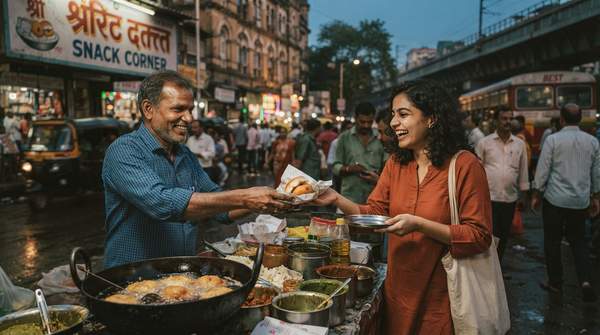
TasteAtlas has released its 2025/2026 "100 Best Food Cities in the World" ranking, and the answer to where food travelers should eat next is a familiar one with a twist: Italy holds the top four spots — Naples, Milan, Bologna and Florence — while Mumbai claims fifth place, leading a six-city contingent from India. The list, built from 590,228 valid user food ratings, rewards cities for the depth and consistency of their everyday traditional cooking, not their Michelin credentials.
TasteAtlas Unveils 2025/2026 'Best Food Cities' Ranking
The awards, published on TasteAtlas's site as the "Best Food Cities in the World — TasteAtlas Awards 25/26," rank 100 cities drawn from 18,828 cities in the platform's database. According to the ranking page, the winners "stand out with the highest average ratings for the regional and national dishes most commonly served there," based on 590,228 valid ratings covering 18,912 foods.
For me, what makes this release worth a traveler's attention is what it captures. As Colleen Cabili wrote for Quartz, food travel "used to run on word of mouth" before TasteAtlas "turned it into a database." The result, she notes, is "a mix of predictable heavyweights and smaller cities whose culinary reputations outrun their populations." Moneycontrol's Priyanka Roshan reported that Mumbai ranks fifth on the 2026 list, with Delhi, Hyderabad, Amritsar, Kolkata and Chennai also featured.
Understanding the TasteAtlas Methodology: A User-Driven Approach
Here is the part that changes how you should read any city's position: the ranking is not a critics' poll. TasteAtlas catalogs thousands of traditional dishes, ingredients and drinks, collects user ratings on each, and ranks cities by how highly eaters score the regional and national dishes most commonly served there. There are no professional judges and no fine-dining component in the calculation.
What lifts a city, as Cabili put it, is not "Michelin stars or a famous chef. It is depth." The approach favors places with long culinary histories and tight regional identities — where a single preparation, "a bowl of noodles, a style of pizza, a clay-pot stew — gets refined over generations instead of redesigned for a camera." It also weighs how consistently those dishes show up across neighborhoods and price points, and how strongly the people eating them rate the result.
One caveat worth keeping in mind: a secondary Moneycontrol report by Manjiri Patil described the underlying dataset as 590,228 verified ratings across 16,357 foods, while TasteAtlas's own awards page cites 18,912 foods. The rating total matches; the food count differs between the two accounts. The practical takeaway is unchanged — this is a crowdsourced measure of beloved everyday food, with all the enthusiasm and bias that implies.