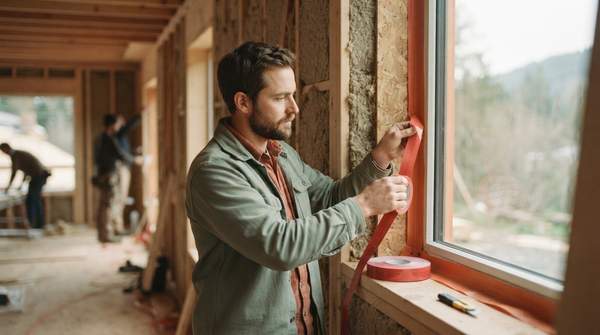
Passive House design comes down to five principles working together: a superinsulated envelope, airtight construction, high-performance glazing, thermal-bridge-free detailing, and heat-recovery ventilation. None of them delivers the standard's signature results alone. As Passive House Accelerator explains, all five are "linked to and impact each other in the design," and it is that integration — not any single upgrade — that lets a Passive House consume up to 90% less heating and cooling energy than a conventional building while keeping indoor temperatures stable and air quality high.
The Foundation of Passive House: An Integrated System
Passive House is best understood as a "fabric first" approach: instead of buying bigger mechanical equipment to fight heat loss and gain, you engineer the building envelope itself to do most of the work. Yale Climate Connections describes the concept vividly — imagine a home so efficient it could be heated with a hair dryer. That is only possible because the envelope, not the furnace, becomes the primary climate-control system. The five principles below are the components of that system, and each one depends on the others to function as intended.